Ancestor Veneration in Polish Tradition (Dziady) and Ancestor Blessing Spells
By Haggath ·
Dziady — 'the forefathers' — was the old Slavic feast of the ancestors, when the dead were believed to return home and were welcomed with food, drink, light and remembrance. In Poland it lives on in the candlelit cemeteries of All Saints' and All Souls' Days, 1–2 November. An ancestor blessing spell draws on this respect to ask for the family's guidance and protection; it is a spiritual practice, not a promise.
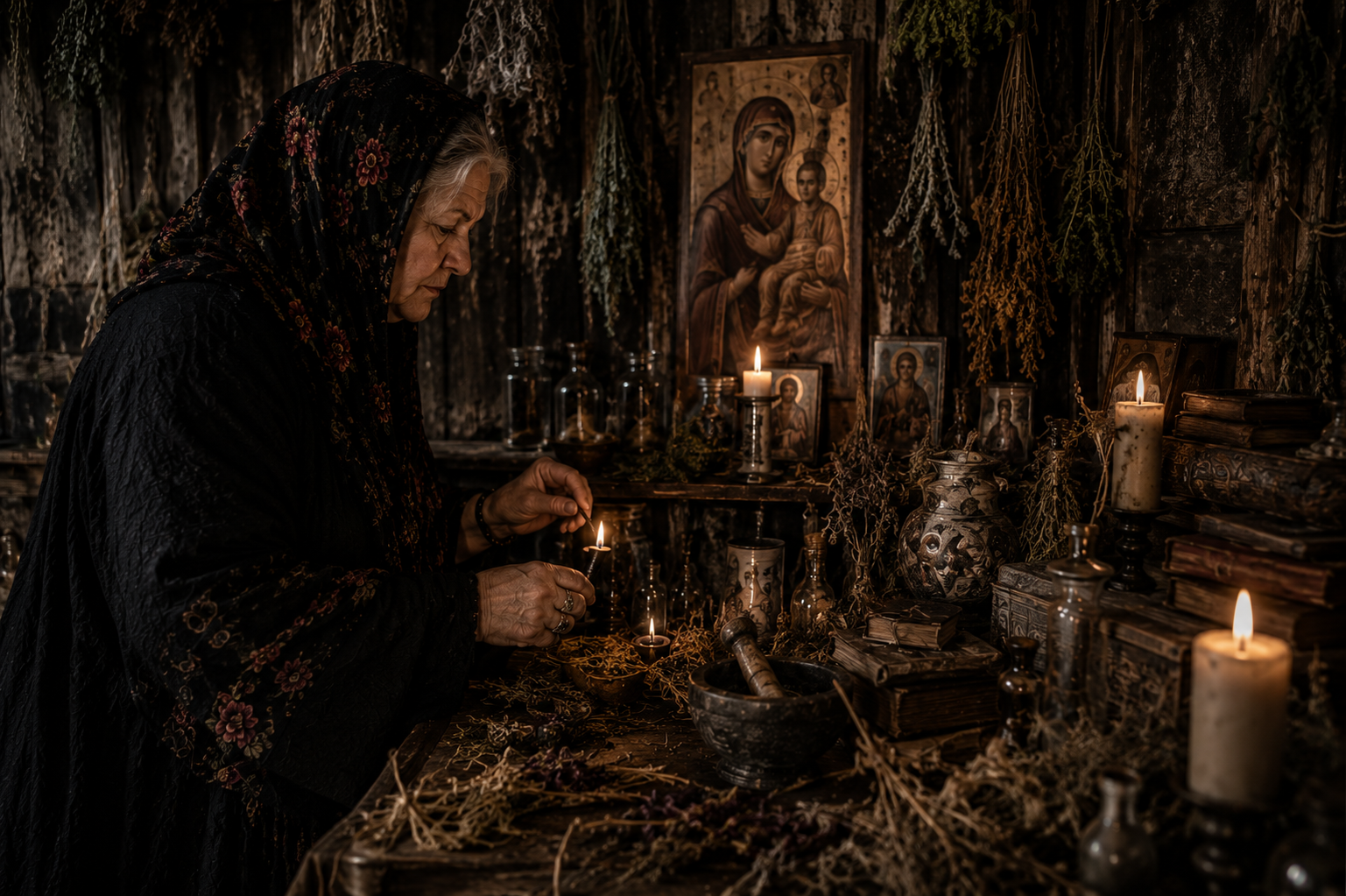
Moja droga, every November the cemeteries of Poland glow with thousands of little candles. It is one of the most beautiful sights in the world, and it is very, very old.
What Dziady was
Dziady means 'forefathers' or 'grandfathers'. Among the Slavs, especially in the east, these were feasts held several times a year — commonly in spring and autumn — when the souls of the dead were thought to come back to visit. Families prepared food, opened the door, lit fires and gathered to remember them by name.
The custom is best known to Poles through Adam Mickiewicz's great drama Dziady, written in the nineteenth century, which drew on rites he knew from the countryside of his youth in what is now Belarus and Lithuania.
The ancestors were not only remembered on feast days. In many Polish homes the dead were part of ordinary life: their photographs hung on the wall beside holy pictures, their names were given to new babies, their sayings were repeated at the table. Grandmothers told stories of their own grandmothers to children by the stove. In that sense, every family that remembers is already keeping a little Dziady all year round. When I cast ancestor work, I am simply doing on purpose and with ceremony what loving families have always done naturally — keeping the thread between the generations unbroken.
Old customs of the ancestors' feast
Ethnographers recorded many small customs around the feast. Food was set out for the dead, sometimes a share put aside on the table or by the window. People avoided spilling things or sweeping crumbs away carelessly, in case the visiting souls were near. Fires were lit at crossroads so that wandering souls could warm themselves and find their way.
Each region and family did things a little differently. I do not claim there was one correct rite; there was a shared feeling — that the dead are still part of the family and deserve care.
How Poland honours its dead today
On 1 November, All Saints' Day (Wszystkich Świętych), and 2 November, All Souls' Day (Zaduszki), Polish families travel, sometimes across the whole country, to visit the graves of their relatives. They clean the stones, bring chrysanthemums and light glass candles, znicze. By evening, cemeteries shimmer with light.
Christmas Eve, too, keeps an echo of the ancestors: an extra place set at the table for the unexpected traveller, which many families also think of as a place for those who are gone.
Honouring your ancestors at home
You do not need a Polish cemetery to honour your own family. Set a photograph or a name written on paper by a window. Light a candle in the evening — safely, and never left alone. Place a small piece of bread, salt or something they loved beside it. Say their names aloud and tell them what is happening in your life.
If your family history is painful, it is enough to honour the ancestors you know were good, or simply 'those who came before me who wished me well'.
What an ancestor blessing spell is
When I cast an ancestor blessing, I set a table as the old feast did: bread, salt, honey, water and candles. I speak your family names, if you have given them, and ask those who loved you to watch over you, guide your choices and keep your house. I write to you afterwards with what I did and what you might keep at home.
It is a spiritual practice — an act of remembrance and asking — not a way to speak with the dead or to know their wishes. Results vary, and nothing is guaranteed.
A word about grief
Some people come to ancestor work in fresh grief. That is natural and the old customs were made for it. But grief can be heavy, moja droga. If it is overwhelming you, please lean on the people around you and on bereavement support or a doctor. A candle and a blessing can sit beside that help; they cannot replace it.
Keeping the names alive
In the old villages, remembering the dead by name was part of the feast. Today, many Polish families still give lists of names to the priest in November, so they can be read out during prayers for the dead. The habit of saying names aloud is a simple, powerful thing, and you can keep it wherever you live.
Try writing a little family list: your grandparents, great-grandparents, any aunts, uncles or friends who mattered to you. Add a line about each — a dish they cooked, a word they always used, a place they loved. Keep the list in a drawer and bring it out on the first evening of November, or on their birthdays, and read it by candlelight.
This is not magic in any dramatic sense. It is remembrance. But remembrance is the root of ancestor work, and it keeps a family's story warm for the children who come after.
Spells mentioned in this article
Questions people ask
What does Dziady mean?
It means 'forefathers'. It was the old Slavic feast of the ancestors, when the dead were believed to return home and were welcomed with food and light.
Is Dziady the same as All Souls' Day?
Not exactly. Dziady is the older Slavic feast; in Poland its spirit lives on in All Saints' and All Souls' Days on 1 and 2 November.
Can I honour my ancestors if I am not Polish?
Yes. Remembering the dead with light, food and their names is common to many cultures.
Can an ancestor spell let me speak with the dead?
No. An ancestor blessing is remembrance and asking for guidance; I do not claim to contact the dead.
When is the best time for ancestor work?
Traditionally autumn and the early days of November, but you can honour your family at any time.
Would you like me to cast for you?
If you would like me to set the old table for your ancestors, see my spirit and energy spells.
See spirit & energy spellsResults vary. A spell is a spiritual practice, not a guarantee, and never a substitute for medical, legal or financial advice.
More from the journal
- What Is Slavic Folk Magic? A Village Witch's Guide to Polish Spells
A plain guide to Slavic folk magic from a village witch near Kraków: herbs, salt, bread, thread, spoken charms, the ritual year, and what a spell can and cannot do.
- How to Prepare Before Ordering a Spell, and What to Do Afterwards
A practical guide to preparing before you order a spell from Haggath, what to write, what happens during casting, and sensible things to do afterwards.
- How to Choose a Genuine Spell Caster: Red Flags and Scams to Avoid
An honest guide to choosing a spell caster: the red flags of spell scams, what a genuine caster does, and the questions to ask before you pay anyone.